Gambling in Northern Ireland
The Evolution of Casino Regulations in the UK: A Historical Perspective
The United Kingdom Gambling Commission also has rules that dictate how operators can advertise their platforms. The latest stipulation regarding the handling of player funds is just one of many licensing conditions the UKGC has put in place to ensure the safety of all players. The arrangements falling in the medium category include Quistclose accounts and insurance arrangements. Therefore, when you choose one of our recommended UK casino sites, you can ante-up safe in the knowledge that every game is fair and all your funds will be protected and insured by the UK government.
This includes many casinos monitoring customer expenditure across all gaming products, enhanced due diligence measures with trigger values for spend and loss applied to customers and algorithmic systems that use predictive models to identify customers at risk. While online operators are able to track play precisely and apply more tailored player protections, land-based casinos have adopted a range of measures in recent years that have enhanced player protections and tracking. As outlined in the white paper, it is our intention to bring greater coherence to the licence system by allowing 1968 Act casinos of a certain size to have the same gaming machine allowance as Small 2005 Act casinos. Unlike most commercial gambling, Category D gaming machines, which include coin pushers and crane grabs, are not restricted by age. In order to future proof the gaming machine industry and adapt to modern payment technologies, we are seeking views on a range of player protections that will ensure players can use modern payment methods whilst mitigating the risk of harm. Measures that we are seeking views on are intended to address inconsistencies between the different types of casino licence, as well as levelling the playing field to an extent between land-based and online operators.
This includes all online casinos, both UK-based and offshore, that wish to offer their services to patrons in England, Wales, or Scotland. When it comes to gaming machines, however, the law sets no minimum age for Category D machines. Regional casinos are permitted to have up to 1,250 machines from Categories A, B, C, or D. Small casinos may offer up to 80 machines from Categories B, C, or D, whereas large casinos can host a maximum of 150 machines from those categories.
We think that this 30 second transaction time, coupled with the other player protection measures that we are proposing, should ensure that the use of direct debit cards on a machine has a similar level of friction to playing with cash. Following 30 seconds, the player would be able to start depositing money onto the machine. We would suggest that the 30 second period should start from when the machine has read the card and approved the payment. Some respondents stated that any transaction time should at least ensure a break from the machine that is equivalent to the time it takes to access additional funds from an ATM. Responses varied on the length that the transaction time should be, with industry broadly agreeing on 30 seconds and non-industry respondents proposing either 90, 120 or 180 seconds. Our aim throughout the development of this policy has been to replicate the experience of playing on a machine with cash and the deposit and committed payment limits play an important role in the current customer journey.
Gambling in Northern Ireland
Some venues also operate a ticketing system, which allows customers to purchase a ticket with a debit card for use on a gaming machine. The Gambling Act 2005 and the Commission’s Licence Conditions and Codes of Practice permit operators to innovate to some extent, and industry has introduced some cashless gambling. However, it is still the primary way to pay for machines in land-based venues. Please upload any further evidence or any other information that should be considered in this consultation relating to bingo and arcade gaming machine measures.

The personal information we collect and process is the data provided to us directly by you in the responses to this consultation. This notice sets out how DCMS will use your personal data as part of our legal obligations with regard to data protection. For the purposes of personal data collected in the course of this consultation, DCMS is the data controller.
Players who register with GamStop are blocked from all UKGC-licensed online casinos simultaneously — one of the most powerful tools available anywhere in the world. Under the UK casino regulations, casinos must confirm customers can afford their level of play. Driven by the Government’s Gambling White Paper — enacted through 2024–2025 legislation — these sweeping changes introduce a series of player-protection measures that directly affect how online casinos operate. Online casino games, slots, poker, bingo, and sports betting are all legal, provided the operator holds a UK Gambling Commission licence. To legally offer gambling services in the UK, operators must obtain licences from the UK Gambling Commission. Casino gambling is permitted online and in land-based venues, provided the operator is licensed by the UKGC.
Calculation of table gambling areas and non-gambling areas
Find out more about how we regulate the gambling industry in Great Britain. In particular, we are grateful to the House of Lords ad-hoc Select Committee on the social and economic impact of gambling, and we have considered all of the evidence submitted directly to that committee and its recommendations in our deliberations. In the period between the opening of the call of evidence on the 8th December 2020 and publication, the ministers responsible for the Gambling Act Review had over 100 meetings with stakeholders on gambling issues. While all industry submissions recognised the need to update the regulatory framework and presented useful evidence to consider, some outlined far more developed proposals for reforms than others. The gambling industry made 57 submissions, coming from both trade bodies (for instance Betting and Gaming Council, Bacta, The Bingo Association, and the Lotteries Council), as well as individual companies. We are particularly grateful to those who shared the evidence of their own experience of harm to inform sites not on gamstop the Review’s deliberations as they provide an important personal perspective.
The Gambling Commission issues a code of practice on the provision of gaming machines in alcohol-licensed premises. There is no upper limit placed on the number of gaming machines allowed, but if a venue wants to install more than two machines, they must apply to the licensing authority to do so (as set out in section 283 of, and Schedule 13 to, the Gambling Act 2005) and pay the prescribed fee. In England and Wales, alcohol licensed premises currently have an automatic entitlement to up to two Category C or D gaming machines. Following a consultation on proposals for changes to Gaming Machines and Social Responsibility Measures, the maximum stake on B2 machines (Fixed Odds Betting Terminals) was reduced from £100 to £2 in April 2019, to reduce the risk of gambling-related harm. These include a variety of venues in practice, including ‘high-end’ casinos which cater for high-net worth (mainly international) clients and have a business model based primarily on live gaming tables. The 2005 Act casinos are also subject to minimum overall and non-gaming space requirements which were introduced alongside a ratio of machines to tables aimed at ensuring a balanced offer of different products.
1 The current position
The full impact is explored in further detail in Section 10 of Annex A. Alongside the changes to this ratio, we expect operators to continue to improve player safety controls as outlined above, and work with regulators to ensure full compliance. Without an increase in stakes or a change to the 80/20 rule, operators have highlighted their difficulties in meeting increased costs. Concerns regarding energy efficiency are particularly relevant, with operators estimating that costs have increased significantly over recent months. The code includes a commitment to introduce standards to all new land-based slots products such as ensuring cash payout games do not appeal to children and that awards below the stake are not celebrated.
Some stakeholders proposed an expanded pre-release product testing regime where each new game would be tested to appraise its potential to cause harm. Most respondents to the call for evidence discussed product controls in the context of limits on structural characteristics, for example limits on stake and speed of play. These reported indicators cannot be used to directly infer reductions in harm, but they do suggest a moderation in play brought about by the changes.
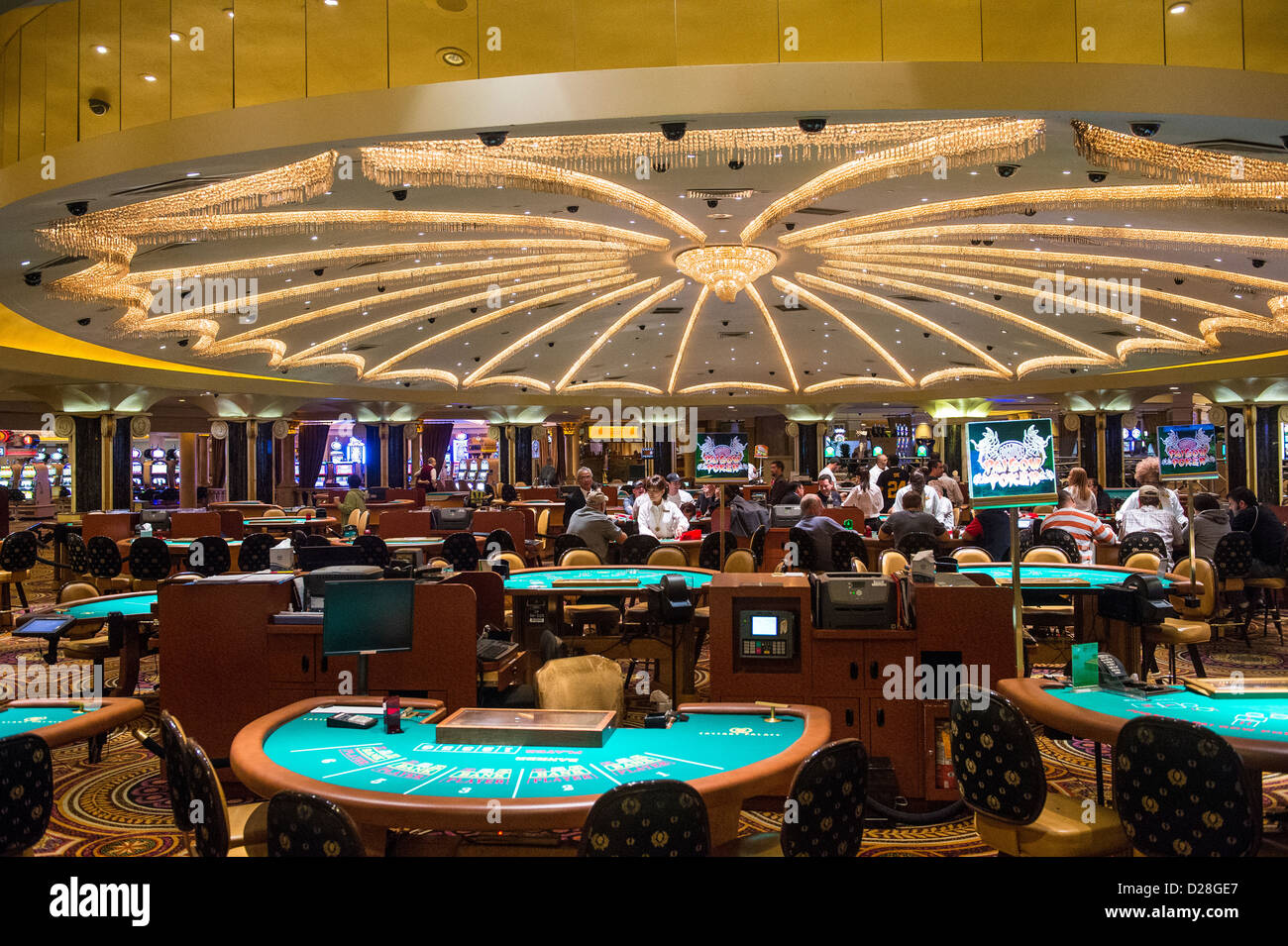
Respondents were in favour of venues having to comply with all of the sliding scale requirements in order to increase their gaming machine allowances. • Any non-gambling area may consist of one or more areas within the premises. This will ensure that gaming products, such as single-player games in which the player presses a switch or button, or pulls a plunger or lever, to release a ball or set of balls cannot count towards the machine to table ratio. Therefore both wholly automated gaming tables and table games of equal chance do not attract any gaming machine allowance for the purposes of meeting the machine to table ratio.
Beyond the 10x wagering cap, the new rules require casinos to display all bonus terms clearly and in plain language before a player opts in. All UKGC-licensed casinos must offer deposit limits, loss limits, session limits, and wager limits. Responsible gambling sits at the heart of the UK casino regulations 2026. To understand exactly what to look for, read our guide on how to choose a UK online casino.
On the other hand, the position taken by the ASA in its regulation of gambling advertising is that gambling is already normalised as a legitimate leisure activity for adults in Great Britain. Many responses from those with personal experience reported how harm can be intensified by ad targeting and direct marketing, and that even with self-exclusion tools in place which prevent direct marketing, the exposure to marketing elsewhere could nonetheless be triggering, especially during recovery. The responses we received particularly emphasised that regardless of the form of advertising, it can have much stronger, and adverse, impacts on those who are already experiencing problems with gambling.
The 2025 changes in the UK are massive, which to many could make gambling laws as complicated as the rules of cricket. This should lead to better-informed decisions about gambling. This change is intended to reduce the number of bets people place, which should eradicate a good amount of problem gambling.

These limits apply exclusively to online slots. Online slot stake limits are one of the most significant player-facing changes in recent UK gambling history. Always check bonus terms, as some operators have adjusted minimum deposits, maximum bet sizes during wagering, or game contribution weightings to compensate. This reform has fundamentally changed the value proposition of casino bonuses.
Finally, it focuses on minimizing the negative impact of gambling on society by protecting children and other vulnerable groups from problem gambling. Second, it seeks to prevent gambling from being linked to any form of criminal activity. First, it aims to ensure that all gambling is conducted in a fair and open way. The Act established the Gambling Commission and transferred licensing responsibilities from the magistrates’ courts to local authorities and Scottish licensing boards. It is also responsible for monitoring and supervising all gambling operations and can carry out inspections and inquiries.
The increased complexity of operators’ business structures has made it increasingly difficult for the Commission to manage requests for changes of corporate controls and identify and assess the ultimate beneficiaries of applicants for licences. While the Commission is able to respond with its existing powers to many issues that arise, it has advised that certain issues have emerged due to operators becoming larger, more organisationally complex and internationally-based. The Commission has a wide range of powers that allow it to regulate the industry effectively and respond to any emerging risks, particularly through the LCCP which all licensees must adhere to. This should involve more timely data to enable quicker assessment of the risks to consumers and to enable regulatory action to be taken more swiftly where necessary. The government and the Commission are clear that an enhanced approach to compliance enforcement is required to effectively monitor the industry and ensure that operators are abiding by the rules. We welcome these additional steps which businesses have taken to ensure their operations are safe and sustainable, and welcome the continual drive to raise standards which can then be underpinned by licence conditions to ensure compliance across the industry.
The white paper set out a detailed rationale for the need to reform the current 80/20 rule governing gaming machine allowances in AGCs and bingo halls. As a result, these venues will be entitled to choose between adopting any revised entitlement set down in legislation following this consultation or retaining the four Category B machine allowance for AGC premises and eight Category B machine allowance for bingo premises. The proposals outlined in this consultation to reform the 80/20 rule will again permit AGC and bingo premises to retain these legacy rights where the relevant premises licence was granted before 13 July 2011. Please upload any further evidence or any other information that should be considered as part of this consultation relating to casino measures.
The Gambling Commission’s annual Young People and Gambling survey found that the past week gambling participation trend for 11 to 16-year-olds had decreased from 23% in 2011 to 7% in 2022 (Figure 17). In 2020, gambling was included in the Department for Education’s relationships and sex education (RSE) and health education statutory guidance for England. In December 2020, following a consultation, the government announced that the minimum age to play National Lottery products (including draws, instant win games and scratchcards) would be increased to 18 years old from October 2021. Football pools and society lotteries have a statutory minimum age for play of 16 years, but some operators voluntarily apply a higher age limit of 18 years. Currently most licensed gambling activities and products are restricted to 18 and over, and it is an offence under the 2005 Act to offer gambling products which are intended only for adults to children. However, children remain a vulnerable group, and even young adults (18 to 24-year-olds) who are legally permitted to gamble may still be particularly susceptible to harm.
- In bingo and adult gaming centres, promotions generally consist of small scale incentives/ rewards such as introductory offers for new products, free teas and coffees, or free games.
- The gambling industry made 57 submissions, coming from both trade bodies (for instance Betting and Gaming Council, Bacta, The Bingo Association, and the Lotteries Council), as well as individual companies.
- This evidence suggests that a simplified approach to communicating cost-of-play information could be more impactful and reduce harm compared to the currently permitted ‘return to player’ approach.
However, PHE reports that harmful gambling is more prevalent in people who are unemployed and living in more deprived areas. According to NatCen’s Patterns of Play dataset, gambling participation is roughly evenly distributed across the different deciles of the Index of Multiple Deprivation. Therefore, to calculate the income drop for both media and sponsorship, we have estimated knock-on impacts from financial risk protections (assuming that income which is either not from Great Britain or not online will remain constant). We have estimated impacts from our online financial risk protections on horse racing using the assumptions outlined below. In particular, the racing industry has expressed concern about the impact of financial risk checks on levy income.
CIAs for alcohol licensing also cannot include considerations of demand, which would be consistent with section 153(2) of the Gambling Act 2005. An option suggested by licensing authorities and the Gambling Commission was to introduce cumulative impact assessments (CIAs) as used in the Licensing Act 2003, which created CIAs for alcohol licensing. It would also like customers to be able to choose to place a bet when they wish rather than pay for a fixed number of bets up front via the participation fee.
In addition to failing to identify those suffering harm, respondents identified wider practices which might be detrimental to consumers, such as the profiling of customers and the restriction of winning accounts. Operators broadly argued in favour of these tailored controls, rather than measures which may limit the enjoyment of gambling for the majority of players who suffer no ill effects and may (if curtailed in their gambling) turn to unlicensed operators. Many operators were confident that their current and increasingly sophisticated harm detection algorithms would have prevented ‘historic cases’ where harm occurred without sufficient action. Given the Review’s focus on ensuring our gambling laws are fit for the digital age, it is unsurprising that a significant amount of evidence was submitted in response to the remote gambling questions in our call for evidence. When used in conjunction with self-exclusion, payment and website blocks can add a further layer of protection for people recovering from gambling harm.
Non-compliance by affiliates can lead to fines, reputational damage, or licence reviews for the operator. The UKGC holds operators accountable for any breaches committed by their affiliates. Gambling advertising in the UK is subject to strict regulation to protect vulnerable audiences, including minors, and to keep marketing honest.
Under such circumstances, and given the relatively higher stakes and losses set out in the rationale for change, there is the potential for gambling-related harm to increase. Without any requirement in law for a balanced offer, it is possible that this option would result in Category B machines becoming the only product on offer. For example, a customer could stake 50p on these machines which is also below the maximum stake permitted on Category C machines. Multi-staking category B cabinets provide customers with the choice of staking at different levels and therefore below the maximum stake permitted.